PSY 53 · Learning game
The Memory Lab
A browser game with six bite-sized experiments that let players catch their own memory in the act, then explain the psychology behind what just happened.
Project snapshot
- Role
- Solo researcher, designer & builder
- Context
- Final project for PSY 53, Tufts
- Timeline
- Jan – May 2026
- Format
- Interactive browser game, 6 experiments
- Tools
- Figma + Figma Make (prototype); HTML, CSS, JavaScript; GitHub Pages
- Status
- Live and playable
The problem
Memory is the part of psychology I find most fascinating: how much we forget, how confidently we misremember, and how little of it we notice. The Memory Lab started as my final project for PSY 53 and became one of my passion projects.
Memory research is full of effects that are easy to define and hard to believe: you remember the start and end of a list better than the middle, and a false statement starts to feel true just because you’ve seen it before.
Reading about an effect is not the same as noticing it in yourself. I wanted to build something where the player’s own results are the lesson.
Users & research
The learner: a student meeting these concepts for the first time, with a few minutes to spare and no patience for a lecture.
Key insight
People trust their own data. Show them their memory curve first, and the explanation lands as an “oh, that’s why.”
I had 25 people play it, which let me see whether the “catch yourself” moment actually happened outside my own head.
Process
I prototyped the whole experience in Figma before writing any code. Planning up front kept the scope realistic for one semester:
- A screen-by-screen build guide and a flowchart of how players move through the lab.
- A color palette and typography system, so every experiment feels like part of one product.
- A component plan: reusable pieces (cards, progress bars, results screens) instead of six one-off designs.
I picked six classic memory effects and grouped them into three “folders,” so the lab feels explorable rather than like a test:
Memory Curve
Serial position effect: why you remember the first and last words best.
Recall vs. Recognition
Why picking the right answer is easier than producing it.
Depth Dive
Levels of processing: thinking about meaning makes words stick.
Cue Match
Encoding specificity: the cue has to match how the memory was stored.
Priming Lab
Semantic priming: hidden words speed up your brain without you noticing.
Illusion of Truth
Familiarity makes false statements feel true.
Decision: play first, explain second
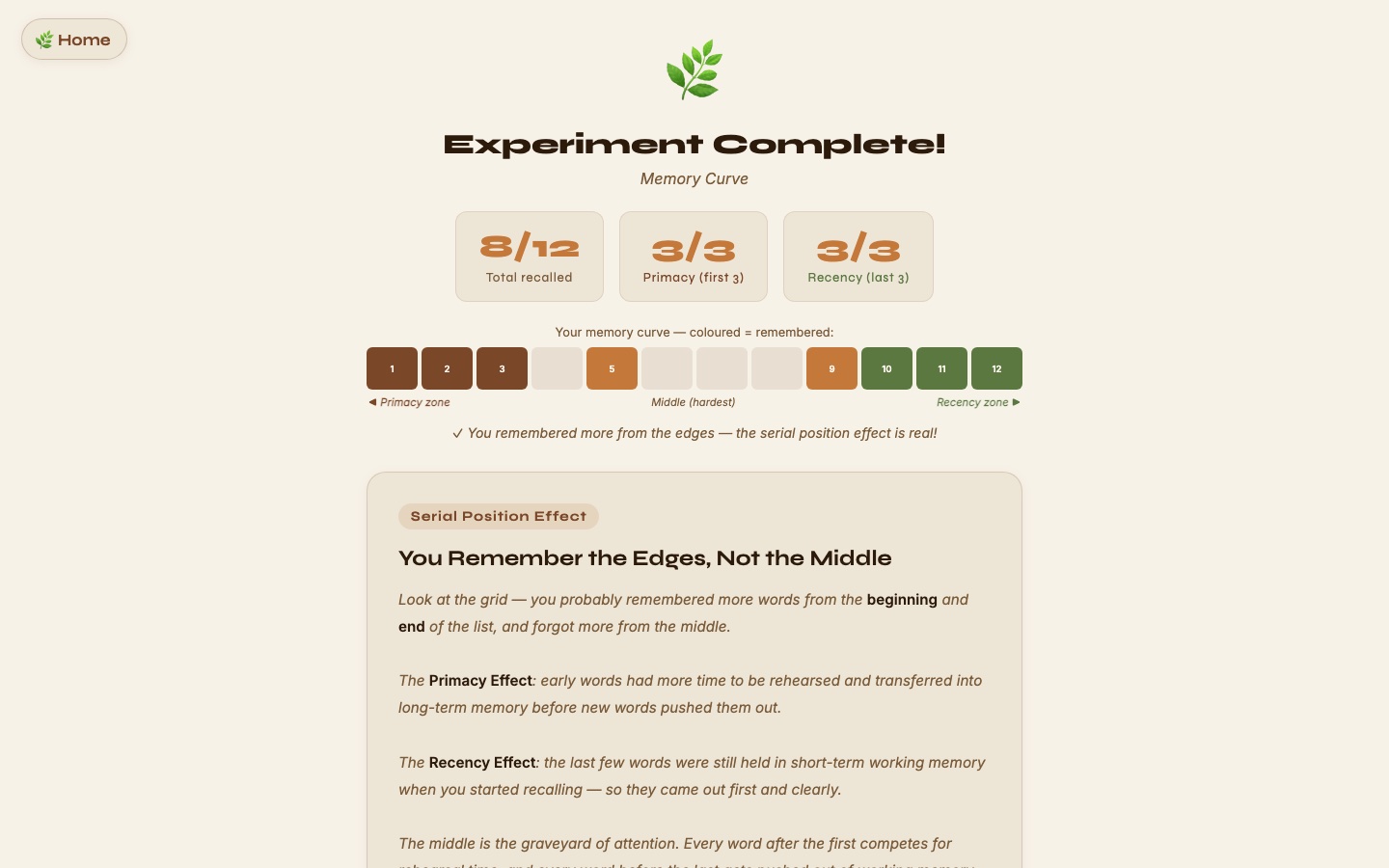
Every experiment runs the same loop: play a short task, see your own results, then get a reveal that names the effect and explains why it happened.
Decision: bite-sized and replayable
Each experiment takes a couple of minutes and stands on its own, with a “Try Another” button at the end, so players can stop anytime or keep going.
What I built
Play the Memory Lab (opens in a new tab)
Step 1 of 4
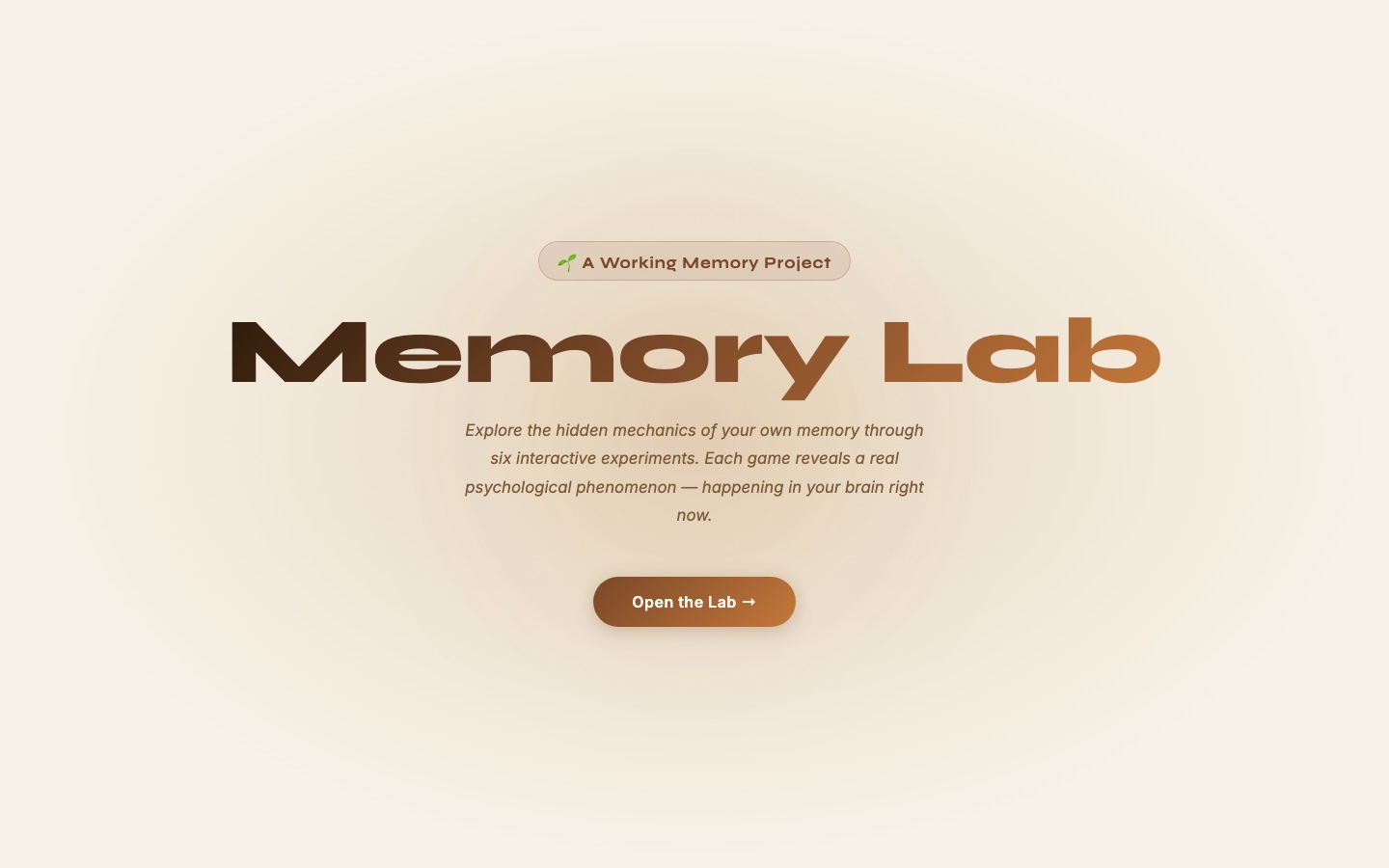
A warm welcome
One sentence and one button. The promise is clear: six experiments, each revealing something happening in your own brain.
Step 2 of 4
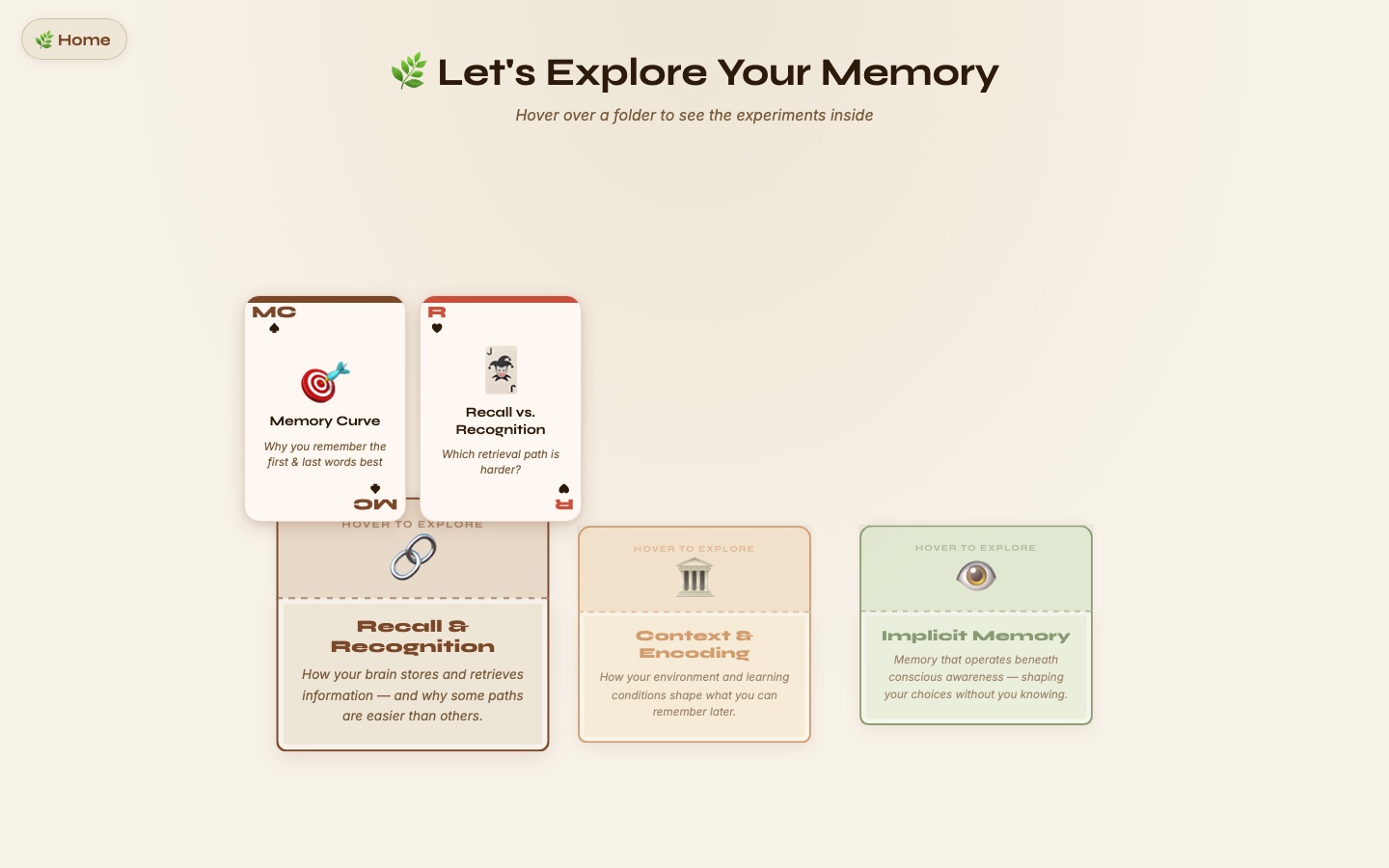
Pick an experiment
Experiments live in folders and pop out as playing cards on hover, which makes choosing feel like play instead of a menu.
Step 3 of 4
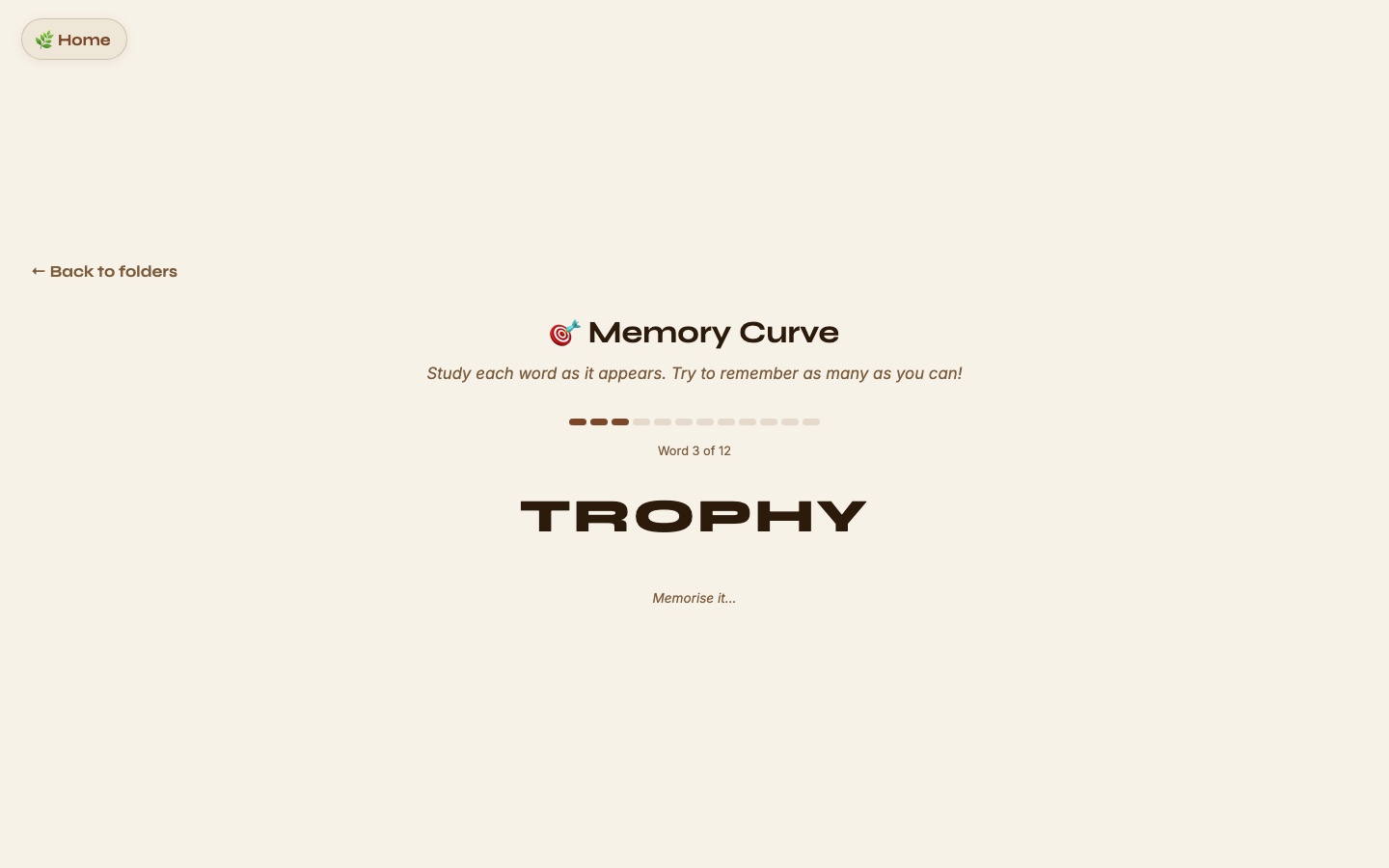
Play the task
One word at a time, with a progress bar and clear instructions. Nothing on screen competes with the task.
Step 4 of 4
See your results, then the reveal
Your own memory curve comes first, color-coded by beginning, middle, and end. Only then does the reveal name the effect and explain it.
The product thinking underneath
- Learn by doing: the experiment is the lesson, not decoration on top of it.
- Bite-sized: one concept per experiment, a few minutes each.
- Tight feedback loop: play → your results → reveal, every time.
- Shipped: a live, playable game anyone can open in a browser.
Outcome & impact
- people played it
- 25
- final project grade
- A+
- experiments across 3 areas of memory
- 6
- shipped on GitHub Pages
- Live
What players said
The most common reaction was surprise: players were caught off guard by how their own memory was tricking them, which is exactly the moment the game was designed to create.